Marketing and sales are changing faster than ever. With the rise of AI tools, businesses of all sizes can now compete in ways that were impossible just a few years ago. These smart technologies help you find better leads, create engaging content, automate routine tasks, and close deals faster. But with so many options, it’s easy to feel lost or overwhelmed. Which tools actually deliver results? How do you use them to grow sales, save time, and boost your marketing? This guide will walk you through the landscape of AI tools for marketing and sales, showing you what’s possible, how to choose wisely, and how to avoid common mistakes.
AI is not just a buzzword. In 2024, over 70% of marketers used at least one AI-powered tool in their daily work. For sales teams, AI-driven lead scoring and outreach can increase closing rates by up to 50% compared to traditional methods. The reason is simple: AI helps you analyze huge amounts of data, spot patterns, and automate tasks that humans struggle to do efficiently.
Some real-world examples make this clear. An e-commerce company uses AI to suggest the right products to each visitor, increasing their average order value. A small agency automates its social media posts and replies, saving hours each week. A B2B sales team uses AI to score leads, so they focus only on the hottest prospects.
But what makes a tool “AI-powered”? It means the tool uses machine learning or natural language processing to do things like understand customer behavior, predict future trends, or generate content automatically. The result is smarter marketing and faster, more effective sales.
Not all AI tools do the same job. To choose wisely, it helps to understand their main categories.
Each category solves a unique problem. Some tools combine features from several categories. Understanding your main pain points will help you pick the right solution.
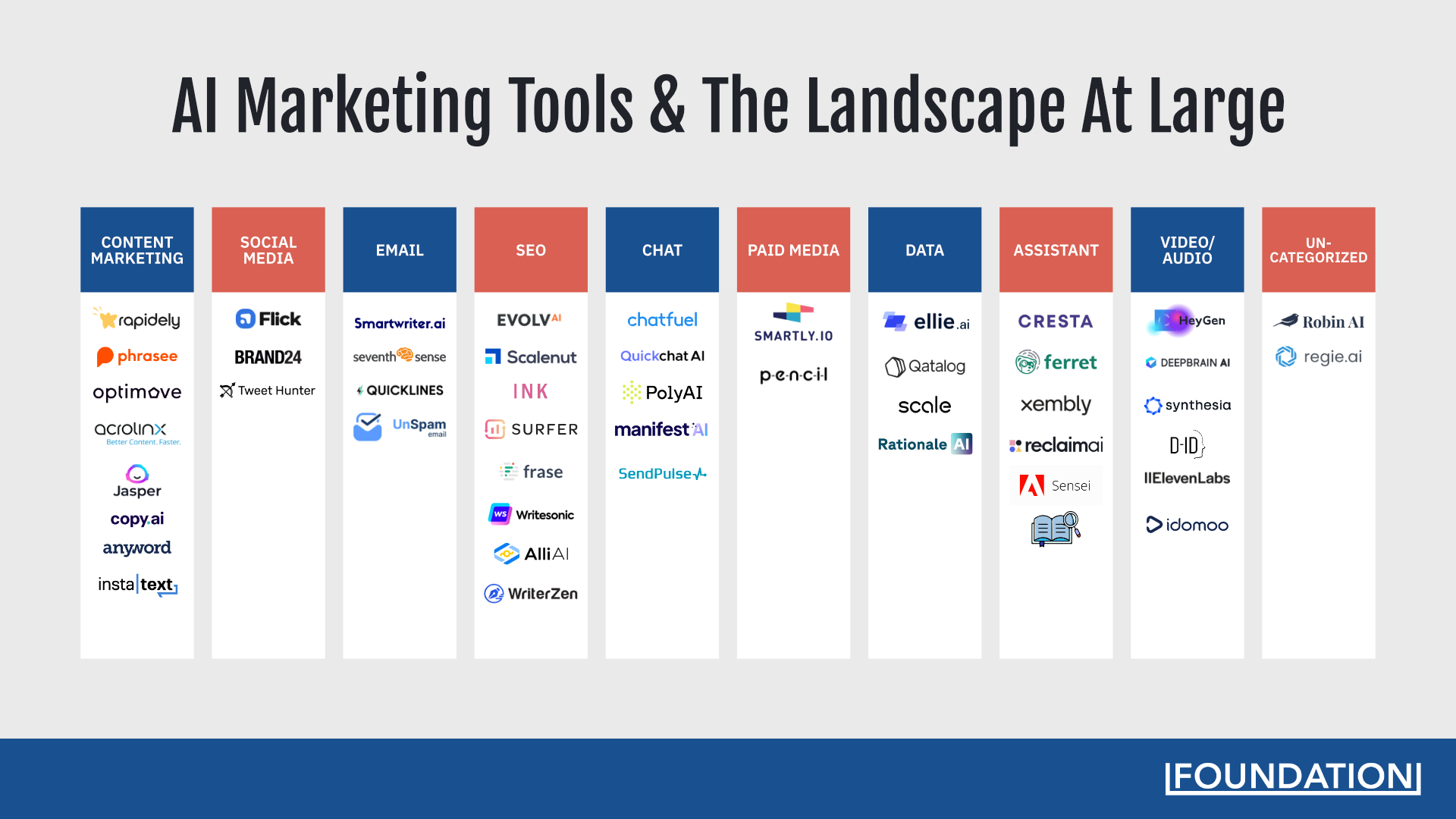
Credit: foundationinc.co
To make things clearer, here’s a side-by-side look at common AI tool types and what they’re best for.
| AI Tool Type | Main Use | Best For | Typical Pricing |
|---|---|---|---|
| Content Creation | Write blogs, ads, emails | Marketers, agencies | $20-$100/month |
| Lead Scoring | Find & rate prospects | Sales teams | $30-$150/month |
| Chatbots | Answer customer queries | Support, ecommerce | $10-$200/month |
| Ad Optimization | Improve ad targeting | Advertisers | % of ad spend |
| CRM Automation | Track & automate sales | B2B sales | $50-$300/month |
This overview helps you match your needs to the right type of AI tool.
AI writing tools like Jasper, Copy.ai, and Writesonic can generate blog posts, ads, product descriptions, or even social media captions in seconds. These tools use large language models to understand your instructions and produce human-like text.
Key features:
Advantages: Save time, reduce writer’s block, get new ideas. Even beginners can create professional-looking content.
Potential drawbacks: AI-written content sometimes lacks a personal touch. Always review and edit before publishing.
Non-obvious insight: AI tools can help you test different tones and styles. For example, you can ask for a “funny” or “formal” version of your ad copy, which is hard to do manually.
Tools like Canva’s Magic Write and Adobe Firefly use AI to help you design images, banners, and social posts. You can describe what you want (“a blue logo with a rocket”) and the tool will generate options.
Benefits: No design skills needed. Customize templates fast.
Tip: AI-generated visuals are great for testing concepts. Use them to get quick feedback before investing in expensive designs.
AI platforms such as MarketMuse and Clearscope analyze top-performing content in your niche. They suggest topics, outline structures, and recommend keywords.
Why it matters: AI helps you focus on topics that have real demand, not just what you “think” will work.
Hidden insight: These tools can reveal content gaps—topics your competitors cover but you don’t. This helps you win more search traffic.
Finding quality leads is the lifeblood of sales. AI can help you discover, qualify, and prioritize prospects more efficiently.
Tools like Apollo. io and Lusha use AI to search millions of databases for potential customers. They analyze job titles, company size, recent news, and even social activity to build targeted lists.
Key features:
Why it works: AI can spot buying signals that humans often miss, like someone downloading a whitepaper or asking about pricing on social media.
Platforms such as HubSpot Sales and Salesforce Einstein use AI to score leads. They look at past interactions, company fit, and engagement to predict who’s most likely to buy.
Benefits: Your sales team spends time only on leads that matter. This can raise closing rates and reduce wasted effort.
Practical tip: Update your scoring rules as your business changes. What worked last year might not fit your current market.
Modern CRMs do more than store contact info. With AI, they can automate follow-ups, predict customer needs, and even suggest the next best action.
AI-powered CRMs like Freshsales and Zoho CRM can send reminders or auto-schedule follow-ups based on customer behavior. If a lead opens your email three times but doesn’t reply, the system can prompt you to call.
Why it helps: No more lost deals due to forgotten tasks.
Some CRMs use AI to analyze which products a customer is likely to buy next or which deals are at risk. They suggest what to offer or which leads need more attention.
Non-obvious insight: Over time, these predictions get better as the AI learns from your data. The more you use the tool, the smarter it becomes.
AI can automate data entry, freeing your team from manual updates. Tools like Pipedrive use AI to fill in missing details or log calls automatically.
Warning: Check the data accuracy often. AI can make mistakes if your inputs are unclear.
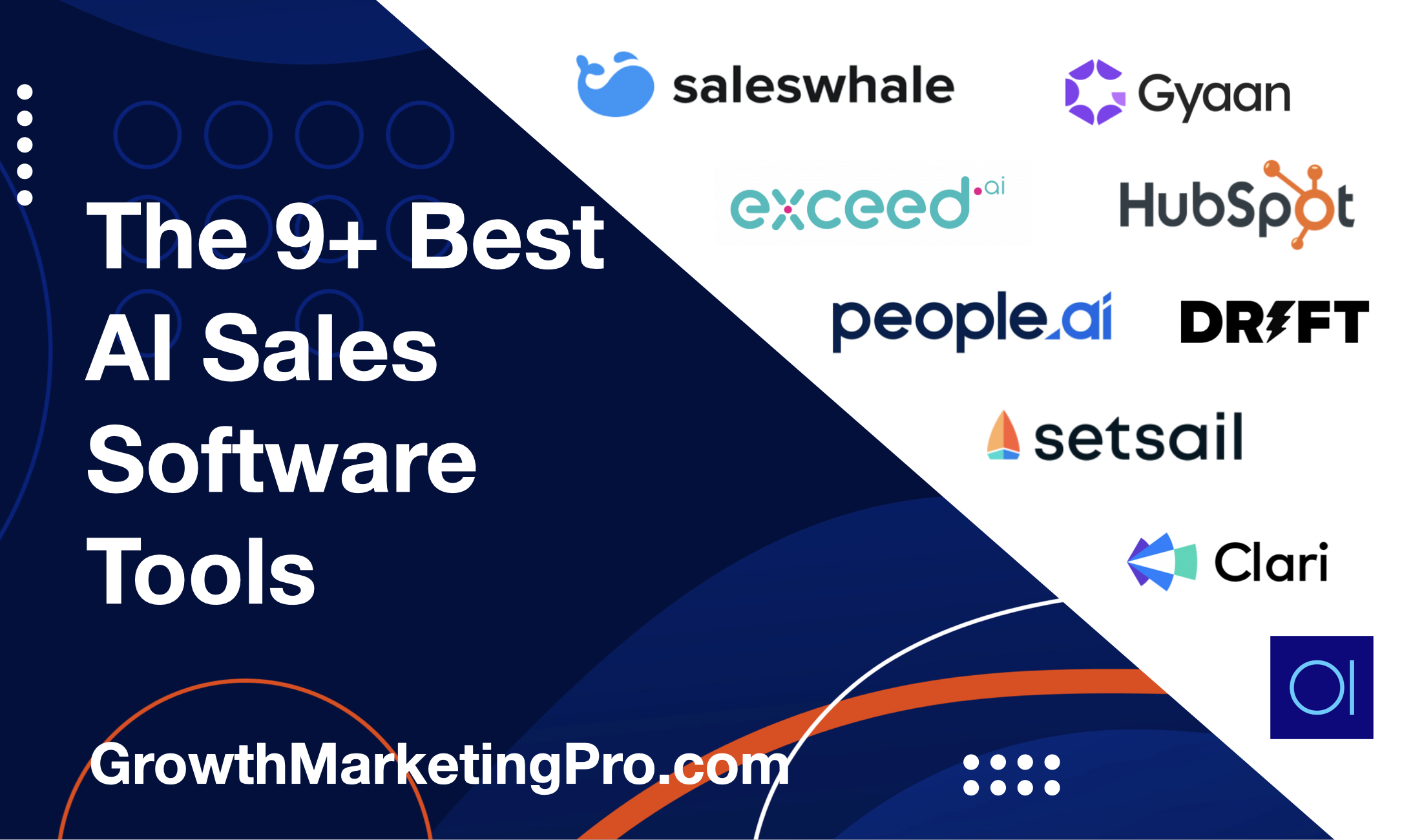
Credit: www.growthmarketingpro.com
Chatbots are now common on websites and messaging apps. They use AI to handle customer questions, qualify leads, or book meetings—24/7.
Intercom and Drift are popular choices. Their bots answer FAQs, collect emails, or route queries to the right person.
Benefits: Faster response times and happier customers. Bots never sleep or take breaks.
AI chatbots ask qualifying questions (“What’s your budget? ”) and send only serious leads to your team. This saves time and reduces spam.
Pro tip: Always give users an option to speak to a human. Some complex issues still need a real person.
Tools like x. ai and Clara schedule calls or demos by finding open slots on everyone’s calendar—no more email back-and-forth.
Hidden insight: These bots can learn your preferences over time (like not booking meetings on Friday afternoons).
Email is still the top channel for ROI in marketing. AI makes it smarter by personalizing content, timing, and even subject lines.
Tools such as Mailchimp and ActiveCampaign use AI to recommend the best content for each subscriber. They can create unique email sequences for different customer segments.
Why it’s powerful: Personalized emails can deliver up to 6x higher transaction rates than generic ones.
AI predicts when each contact is most likely to open and interact with your message, sending emails at the perfect moment.
Tip: Test and refine your campaigns regularly. What works for one list may not for another.
AI can run hundreds of A/B tests, adjusting subject lines, images, or offers to see what works best.
Non-obvious insight: Let the AI find “hidden” winners—combinations you might never think to try.
Predictive analytics uses AI to forecast future trends, sales, or customer behavior. It turns raw data into useful insights.
Platforms like Clari and InsightSquared analyze past deals, pipeline changes, and market trends to predict future revenue.
Advantage: Better forecasts mean smarter hiring, inventory, and budget decisions.
AI can spot signs that a customer might leave—like reduced usage or slow replies. This lets you act early to retain them.
Practical tip: Combine AI insights with customer interviews. Numbers tell part of the story, but real feedback completes the picture.
Some tools predict the likely success of an ad or email before you spend money. They analyze past results and current trends.
Warning: Use predictions as a guide, not the final word. Markets can change quickly.
Advertising and social media are key channels for growth. AI helps you maximize returns and save time.
Platforms like Google Ads and Meta Advantage use AI to set bids, choose audiences, and adjust budgets in real time.
Benefit: Higher ROI with less manual work. AI can test thousands of variations at once.
AI tools can generate and test different versions of your ads, picking the top performers automatically.
Tip: Use AI to experiment with new formats and messaging—what works in one market may flop in another.
Tools like Buffer and Hootsuite use AI to analyze trending topics, suggest hashtags, and schedule posts for maximum impact.
Non-obvious insight: AI can help spot “micro-trends”—small but fast-growing topics before they go mainstream.

Credit: www.wonderway.io
AI can support your sales team with real-time insights, content suggestions, and call analysis.
Tools like Highspot and Showpad suggest the most relevant case studies, presentations, or emails for each sales stage.
Advantage: Reps always have the right content at their fingertips, increasing win rates.
AI platforms such as Gong and Chorus analyze sales calls for keywords, tone, and talk-to-listen ratio.
Benefits: Spot what top performers do differently. Train new reps faster with real call examples.
Hidden insight: AI can flag compliance risks or negative sentiment early, letting you fix problems before they grow.
It’s easy to get excited about AI promises, but there are pitfalls to avoid:
Non-obvious insight: Successful teams assign an “AI champion”—someone who tests new tools and trains others. This speeds up adoption and avoids confusion.
Selecting the right AI tool is not just about features or price. Here’s a simple process to get it right:
Pro tip: Ask for a demo with your own data. This shows if the tool works in your real-world situation.
To help you narrow down your choices, here’s a data-focused look at several popular platforms.
| Tool Name | Main Strength | Best Use Case | Pricing |
|---|---|---|---|
| Jasper | Writing blog & ad copy | Content marketing | $49+/month |
| HubSpot Sales | Lead scoring & automation | B2B sales | $45+/month |
| Drift | AI chatbots | Lead capture | $2,500+/year |
| Mailchimp | Email personalization | Email marketing | $13+/month |
| Gong | Call analytics | Sales coaching | Custom pricing |
| Canva Magic Write | Visual content creation | Social media | $12.99+/month |
These examples show how different tools fit different needs and budgets.
Seeing AI in action can help you understand its value.
Non-obvious insight: Small businesses often see the fastest gains. They move quicker and can shift strategy as soon as results are clear.
AI will only get smarter. Here’s what to expect in the next few years:
Tip: Stay updated with AI trends. What’s advanced today will be standard tomorrow. Invest in tools that update often and offer strong support.
For further reading on the impact of AI in business, check McKinsey’s research on AI adoption.
There’s no single “best” tool. It depends on your main goal. For content, Jasper is strong. For lead generation, Apollo. io or HubSpot Sales are good picks. Start with your biggest need, test a tool, and expand as you see results.
AI can score leads, personalize messages, and suggest the right offer at the right time. This means your sales team spends time only on high-potential prospects, leading to higher conversion rates.
Prices vary widely. Many tools start at $10-$50/month for basic features. Enterprise options can cost more. Focus on ROI—if a tool saves time or wins new customers, it often pays for itself.
No. AI automates routine tasks and provides data-driven insights. But creativity, relationship-building, and strategy still need a human touch. The best results come from humans and AI working together.
Look for ease of use, integration with your current systems, clear pricing, and support. Test with a free trial and check user reviews to see how it fits your workflow.
AI tools are no longer optional—they’re a must for staying competitive in marketing and sales. By picking the right tools, training your team, and tracking your results, you can unlock growth that once seemed out of reach. Start small, learn fast, and let AI take your business to the next level.
