The rise of artificial intelligence (AI) has changed how students learn and how teachers teach. Today, AI tools help students study smarter, organize their tasks, and work faster. With online learning growing every year, these tools are more important than ever. Many students feel overwhelmed by assignments, deadlines, and the need to keep up with new information. AI can help by making learning easier, more personalized, and more fun.
Whether you’re a tech enthusiast, a freelancer, or someone running a small business, understanding the best AI tools for students and online learning will help you find smarter ways to learn and work. This guide explores the top AI tools, compares their features, prices, and gives practical tips to choose the right one for your needs.
The focus is on tools that are easy to use, save time, and make learning more effective—even for beginners.
AI tools are not just a trend—they solve real problems. Students often struggle with time management, understanding new topics, and keeping up with assignments. Online learners face extra challenges like distractions at home, lack of face-to-face help, and motivation issues. AI tools help by:
A 2023 survey showed that 70% of students who use AI-powered study tools report higher grades and better motivation. Many teachers also use AI to make lessons more interesting and to track student progress. For remote workers and freelancers, AI tools improve productivity and help manage projects.
The market is full of AI tools, but not all are equally useful. Here are some of the best AI tools for students, online learners, and anyone wanting to improve their study habits.
ChatGPT is a popular AI chatbot that helps with writing, research, and problem-solving. It can answer questions, explain concepts, and generate essays or summaries.
Key features:
Pros:
Cons:
Pricing overview: Free tier, paid Plus plan ($20/month) for faster responses and priority access.
Practical recommendation: Use ChatGPT for brainstorming, quick explanations, and drafting essays—but always double-check its answers.
Grammarly is an AI-powered writing assistant. It checks grammar, spelling, and style. It also helps students write more clearly and avoid mistakes.
Key features:
Pros:
Cons:
Pricing overview: Free basic plan, Premium ($12/month), Business ($15/month).
Practical recommendation: Use Grammarly for essays, emails, and assignments to make your writing professional and error-free.
Notion AI is part of the Notion workspace app. It helps organize notes, create study guides, and automate tasks. The AI features generate summaries and ideas.
Key features:
Pros:
Cons:
Pricing overview: Free for basic use, AI add-on ($10/month).
Practical recommendation: Use Notion AI to organize study materials and automate repetitive tasks.
Quizlet uses AI to create flashcards and quizzes. It personalizes learning and helps students memorize information faster.
Key features:
Pros:
Cons:
Pricing overview: Free basic access, Quizlet Plus ($7.99/month).
Practical recommendation: Use Quizlet for exam preparation and memorizing facts.
Socratic is an AI-powered homework helper. Students snap a photo of a question, and Socratic explains the answer step-by-step.
Key features:
Pros:
Cons:
Pricing overview: Free.
Practical recommendation: Use Socratic for quick homework help in math and science.
Otter.ai is an AI transcription tool. It records lectures and meetings, then creates searchable transcripts.
Key features:
Pros:
Cons:
Pricing overview: Free plan (600 minutes/month), Pro ($8.33/month).
Practical recommendation: Use Otter.ai to record lectures and study sessions for easy review.
Jasper is an AI writing assistant focused on content creation. It helps students write essays, blog posts, and creative content.
Key features:
Pros:
Cons:
Pricing overview: Starts at $49/month.
Practical recommendation: Use Jasper for brainstorming and drafting long-form content.
Google Bard is a conversational AI that helps with research, writing, and learning new topics.
Key features:
Pros:
Cons:
Pricing overview: Free.
Practical recommendation: Use Bard for research and quick study guides.
Duolingo uses AI to personalize language learning. It adapts lessons to your skill level and tracks progress.
Key features:
Pros:
Cons:
Pricing overview: Free basic, Duolingo Plus ($6.99/month).
Practical recommendation: Use Duolingo for learning new languages at your own pace.
Canva AI offers tools for creating visual projects. Students can design presentations, infographics, and posters using AI-powered templates.
Key features:
Pros:
Cons:
Pricing overview: Free basic, Canva Pro ($12.99/month).
Practical recommendation: Use Canva AI for school projects, presentations, and visual assignments.
To help you choose, here’s a comparison of the most popular AI tools for students and online learning.
| Tool | Main Use | Free Version | Paid Price | Best For |
|---|---|---|---|---|
| ChatGPT | Writing, research | Yes | $20/month | Essays, explanations |
| Grammarly | Grammar, writing | Yes | $12/month | Editing, emails |
| Notion AI | Notes, organization | Yes | $10/month | Study guides, projects |
| Quizlet | Flashcards, quizzes | Yes | $7.99/month | Exam prep |
| Socratic | Homework help | Yes | Free | Math, science |
| Otter.ai | Transcription | Yes | $8.33/month | Lectures, notes |
| Jasper | Content writing | No | $49/month | Long-form writing |
| Google Bard | Research, summaries | Yes | Free | Study guides |
| Duolingo | Language learning | Yes | $6.99/month | Languages |
| Canva AI | Design, visuals | Yes | $12.99/month | Presentations |
Choosing the right AI tool depends on your needs, budget, and learning style. Here are important features to consider:
Many beginners miss the importance of integration with other apps. For example, using Notion AI with Google Calendar helps manage study time better. Another common mistake is ignoring the learning curve. Some AI tools are powerful but complex; starting with simple tools is usually best.

Credit: editmentor.com
AI tools have many benefits, but also some drawbacks. Understanding these helps you make better choices.
A non-obvious insight: AI tools work best as helpers, not replacements. For example, Grammarly improves your writing, but you still need to think about your ideas. Another tip: always check AI-generated answers with trusted sources or teachers.
If you’re new to AI tools, start with free versions and experiment. Use ChatGPT for quick explanations, Grammarly for writing, and Quizlet for memorizing. Combine tools for best results—for example, record a lecture with Otter. ai, then create flashcards with Quizlet.
For group projects, use Notion AI and Canva AI to organize tasks and design visuals.
Don’t ignore privacy settings. Always read the privacy policy and choose tools that protect your data. For remote workers and freelancers, use AI tools to automate repetitive tasks and keep projects organized.

Credit: summitlearningcharter.org
Here’s a closer look at three popular AI writing tools.
| Feature | ChatGPT | Google Bard | Jasper |
|---|---|---|---|
| Writing Quality | Good for essays, explanations | Strong summaries, research | Best for creative writing |
| Customization | Limited | Basic | Advanced templates |
| Price | $20/month | Free | $49/month |
| Ease of Use | Very easy | Easy | Moderate |
| Best For | Students, freelancers | Researchers, quick answers | Bloggers, marketers |
If you want a free, reliable research tool, Google Bard is a good choice. ChatGPT is excellent for essay writing and brainstorming. Jasper is best for long-form content and creative writing but is more expensive.
AI tools are not just helping students; they’re changing the whole education system. Teachers use AI to track progress, create personalized lessons, and identify students who need extra help. Online courses use AI to adapt lessons and quizzes to each learner’s pace.
A 2024 report found that over 80% of universities use AI in their online learning platforms. This means students get more personalized feedback and can learn at their own speed. For small businesses and freelancers, AI helps manage training and team communication.
Modern AI tools also support mobile learning. Apps like Socratic and Duolingo work well on smartphones, making it easy to study anywhere. For remote workers, AI tools help manage virtual meetings, organize projects, and automate boring tasks.
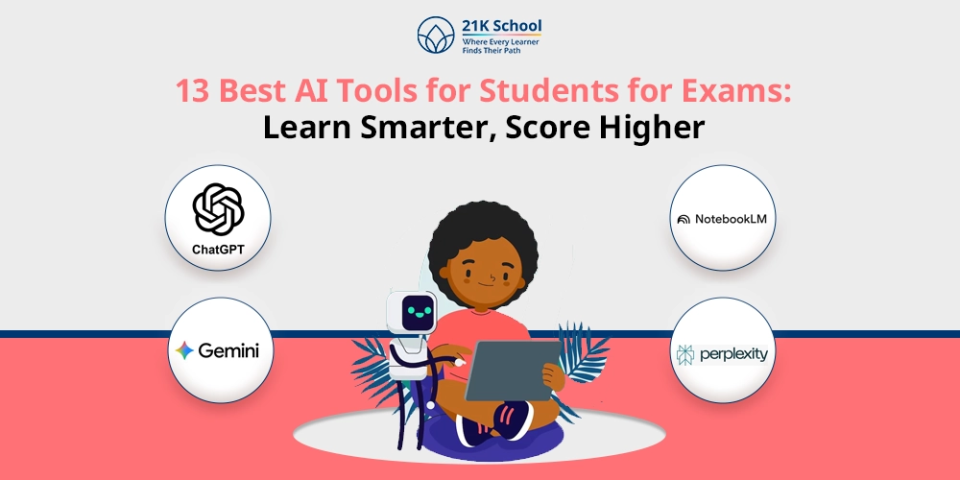
Credit: www.21kschool.com
Many beginners make mistakes when using AI tools. Here are some to avoid:
A smart tip: Treat AI tools as partners in learning. Use them to save time, but keep developing your own skills.
AI in education is growing fast. Experts predict that by 2026, most students will use at least three AI tools daily. New tools will focus on personalization, making learning even more customized. Virtual tutors and AI-powered study groups will become common.
AI will also improve accessibility. Students with disabilities will benefit from AI-powered speech recognition, translation, and visual aids. For remote workers, AI will automate project management and help with team communication.
One non-obvious insight: AI tools may soon use real-time emotion tracking to adjust lessons based on how you feel. This could help keep students motivated and reduce stress.
ChatGPT and Google Bard are among the best free AI tools for students. Both offer conversational help, explanations, and writing assistance. For grammar and editing, Grammarly’s free version is also excellent.
Most AI tools are safe if used correctly. However, always check privacy settings and avoid sharing sensitive information. Use AI as a helper, not for cheating. Many schools now have rules about using AI for assignments.
AI tools like Notion AI and Canva AI help organize tasks, share notes, and design visuals. They make it easier to communicate and collaborate with classmates or team members. Otter. ai is useful for recording meetings and creating transcripts.
Many AI tools support mobile apps. Socratic, Duolingo, Grammarly, and Otter. ai all work well on smartphones and tablets. This makes it easier to study and organize tasks on the go.
For more information on AI tools in education, visit the Wikipedia page on AI in education. It covers history, trends, and research.
Choosing the right AI tool can make studying and online learning more effective, organized, and enjoyable. Start with free tools and experiment to find what works best for you. Combine AI helpers for writing, studying, and organizing projects. Always double-check answers and protect your privacy.
The future of learning is AI-powered—embrace it, but keep developing your own skills. With the right tools, you can achieve more, learn faster, and stay ahead in your studies or work.
