

Imagine having a tool that understands what your customers want before they even say it. What if you could create ads that speak directly to each person’s needs, making them feel seen and valued?
That’s exactly what AI is doing for digital marketing right now. If you want to stay ahead and make your marketing smarter, faster, and more effective, you need to know how AI is changing the game. Keep reading, and you’ll discover how to unlock powerful strategies that can boost your results like never before.

Credit: bernardmarr.com
Ai In Customer Insights
AI is changing how businesses understand their customers. It helps collect and study data fast. This gives clear views of what customers want and need. Marketers use AI to learn more about shopping habits and preferences. This makes marketing smarter and more focused.
Data Collection And Analysis
AI gathers data from many places like websites, apps, and social media. It sorts and checks this data quickly. This helps find patterns and trends that humans might miss. AI makes sure the data is accurate and up to date.
Predictive Analytics
AI uses past data to guess what customers might do next. It predicts buying habits and interests. This helps marketers plan better campaigns. They can send offers and ads that fit customer needs.
Personalized Customer Profiles
AI builds detailed profiles for each customer. It combines data from purchases, browsing, and feedback. This creates a clear picture of individual preferences. Marketers can then send messages that feel personal and relevant.
Enhancing Content Creation
Artificial intelligence improves how content is created in digital marketing. It helps produce more content faster and with better quality. Marketers can focus on strategy while AI handles routine writing tasks.
AI tools analyze data to make content more relevant and effective. This leads to stronger engagement and better results. The process becomes smoother and less time-consuming for creators.
Automated Content Generation
AI can write articles, product descriptions, and social media posts automatically. It uses patterns from existing content to create new text. This saves time and effort for writers and marketers.
Simple tasks like generating headlines or summaries can be done instantly. This helps teams publish content more often and keep their audience interested.
Optimizing Content For Seo
AI tools suggest keywords that improve search engine rankings. They help create content that matches what users search for. This increases website traffic and visibility online.
AI also checks readability and structure to keep content clear and easy to read. It guides writers to use the right words and phrases for better SEO performance.
Dynamic Content Personalization
AI adjusts content based on user behavior and preferences. It shows different messages to different visitors. This makes the content more relevant and engaging for each person.
Personalized content builds stronger connections with audiences. It increases chances of converting visitors into customers by meeting their needs directly.
Improving Advertising Campaigns
AI is changing how businesses run their advertising campaigns. It makes ads smarter and more effective. By using AI, companies can reach the right people at the right time. This saves money and improves results. Below are key ways AI improves advertising campaigns.
Programmatic Ad Buying
Programmatic ad buying uses AI to buy ads automatically. It replaces the old way of buying ads by hand. AI analyzes data and picks the best spots for ads. This happens in real time. It helps companies buy ads faster and cheaper. The ads go where they have the best chance to work.
Targeted Audience Segmentation
AI helps break down audiences into smaller groups. Each group shares similar interests or behaviors. This makes ads more relevant to each group. Advertisers can create messages that fit each audience perfectly. It reduces wasted ad spend on people who don’t care.
Real-time Campaign Optimization
AI watches ad campaigns as they run. It sees what is working and what is not. Then, it makes changes on the spot. This can mean changing who sees the ad, or where it appears. The campaign gets better over time without waiting for humans. This keeps ads efficient and improves results fast.
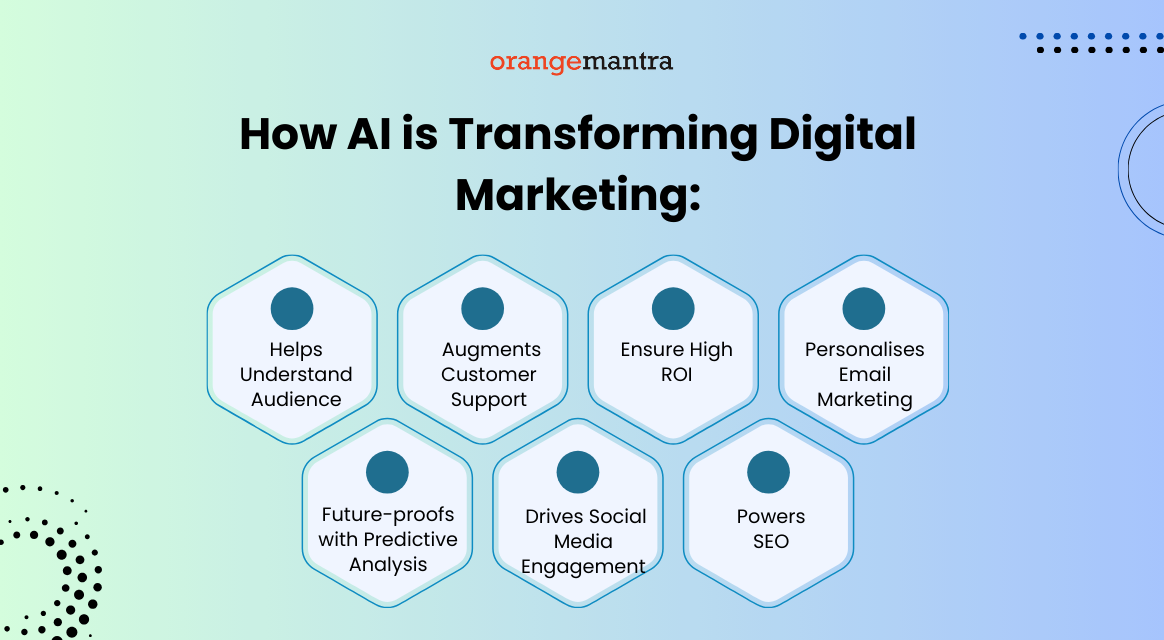
Credit: www.orangemantra.com
Boosting Customer Engagement
Boosting customer engagement is key for successful digital marketing. It helps brands connect with their audience in real time. AI tools make this easier and more effective. They create a smooth, personalized experience for customers. This keeps people interested and coming back.
Ai-powered Chatbots
Chatbots respond instantly to customer questions. They work 24/7 without breaks or delays. These bots learn from conversations to give better answers. They handle simple tasks, freeing human agents for complex issues. This quick response builds trust and keeps users engaged longer.
Voice Search Integration
Voice search lets customers talk to devices naturally. AI understands speech patterns and intent clearly. Brands use voice search to offer hands-free, easy access to info. It fits well with busy lifestyles and mobile use. This smooth interaction raises engagement and satisfaction.
Sentiment Analysis For Feedback
Sentiment analysis reads customer feelings from reviews and comments. AI scans words to find positive or negative tones. Marketers use this data to improve products and services. It helps spot problems early and meet customer needs. Understanding emotions makes communication more effective.
Streamlining Marketing Operations
Streamlining marketing operations is a key benefit of AI in digital marketing. It helps teams save time and work smarter. Tasks that took hours now take minutes. This boosts productivity and cuts down errors.
AI tools handle many routine jobs. Marketers focus on strategy and creativity instead. The result is smoother workflows and better campaign results.
Automation Of Repetitive Tasks
AI automates simple, repeatable tasks like email sending and social media posting. It schedules content at the best times for audience engagement. This frees marketers from manual work. They can then focus on ideas and planning.
Ai-driven Decision Making
AI analyzes data fast and finds useful patterns. It helps marketers choose the best actions. AI suggests which messages or channels perform well. This leads to smarter decisions and better customer targeting.
Budget Allocation And Forecasting
AI predicts how much budget to spend on ads or campaigns. It looks at past data and market trends. This reduces waste and improves return on investment. Marketers can plan budgets with more confidence.

Credit: gerege.com
Ethical Considerations And Challenges
Artificial intelligence is changing digital marketing fast. It helps businesses reach customers better. But these changes bring ethical questions and challenges. Marketers must think about these issues carefully. They affect how people trust brands and use their data.
Data Privacy Concerns
AI relies on large amounts of data. Sometimes, this data includes personal information. Protecting user privacy is critical. Misusing data can harm customers and brands alike. Companies need clear rules about data collection and storage. Respecting privacy builds stronger customer relationships.
Bias In Ai Algorithms
AI learns from existing data. If this data is biased, AI can make unfair decisions. Bias can affect who sees ads or gets offers. This creates inequality and damages trust. Developers must check AI systems for bias regularly. Fair AI leads to better results and happier customers.
Transparency And Trust
People want to know how AI works. Transparency means explaining AI decisions clearly. Brands that share this information gain more trust. Hidden AI processes create confusion and doubt. Openness helps customers feel safe and valued. Trust is key for long-term marketing success.
Future Trends In Ai Marketing
The future of AI in digital marketing holds many exciting possibilities. New technologies will change how brands connect with customers. Marketers will use AI to create more precise campaigns. The focus will be on making experiences smoother and more engaging for users.
AI will keep evolving, helping marketers understand their audience better. It will analyze data faster and suggest smarter strategies. The result will be marketing that feels personal and timely. Let’s explore some key trends shaping this future.
Advancements In Machine Learning
Machine learning will become more advanced and accurate. It will predict customer behavior with greater precision. Marketers can use these insights to target ads effectively. AI models will learn from vast amounts of data quickly. This helps create campaigns that match customer needs closely.
Automation will improve, reducing manual tasks. AI will handle complex data analysis, freeing marketers to focus on creativity. This shift will boost productivity and campaign success rates.
Integration With Augmented Reality
Augmented reality (AR) will blend with AI for immersive experiences. Customers can see products virtually before buying. This helps build trust and increases engagement. Marketers will design interactive ads using AR features. AI will customize these experiences based on user preferences.
AR combined with AI will bring marketing to life. It will make online shopping feel more tangible and fun. Brands will connect with customers in new, exciting ways.
Hyper-personalization Techniques
AI will enable hyper-personalization at scale. Every customer will get tailored content and offers. This goes beyond basic segmentation to individual preferences. AI analyzes behavior, location, and past interactions. Then it delivers messages that truly resonate.
Such personalization builds stronger relationships and loyalty. Customers will appreciate relevant recommendations and timely communication. This trend will shape how brands talk to their audience.
Frequently Asked Questions
How Is Ai Changing Digital Marketing Strategies?
AI analyzes data to personalize ads and predict customer behavior. It automates tasks, improving efficiency and targeting accuracy in campaigns.
What Role Does Ai Play In Content Creation?
AI tools generate content ideas, optimize headlines, and even write drafts. This speeds up content production and enhances relevance for audiences.
Can Ai Improve Customer Engagement In Marketing?
Yes, AI powers chatbots and personalized messaging. It provides instant responses and tailored experiences, boosting customer satisfaction and loyalty.
How Does Ai Help In Marketing Analytics?
AI processes large datasets to identify trends and insights quickly. It enables marketers to make data-driven decisions and optimize campaigns effectively.
Conclusion
AI changes how businesses connect with customers every day. It helps marketers target the right audience quickly. AI tools save time by automating many tasks. Data analysis becomes easier and more accurate with AI. Creative campaigns get new ideas from AI insights.
Challenges remain, but the benefits are clear and growing. Embracing AI keeps digital marketing fresh and smart. The future of marketing will rely more on AI. Staying updated means staying ahead in this field. AI is not just a tool; it’s part of the strategy.