Digital marketing changes every year. Today, AI tools are transforming the way brands reach people, create content, and measure results. If you are a business owner, marketer, or freelancer, you must understand these tools. They help you save time, make better choices, and grow your audience. In this article, you’ll learn how AI tools can boost your marketing efforts, which tools are best for each task, and how to use them wisely. We’ll share practical examples, real pricing, and tips you won’t find elsewhere. Let’s dive in and see how you can stay ahead in digital marketing with AI.
AI, or artificial intelligence, can process data and make decisions faster than humans. In digital marketing, this means smarter ads, more personal content, and better customer service. For example, AI can:
The main benefit? AI tools save you time and money while improving results.
But there’s a hidden advantage: AI spots small patterns in data that humans miss. For example, it can notice which words in your ad text get more clicks, or which colors in a picture make people buy. This helps you improve your marketing much faster.
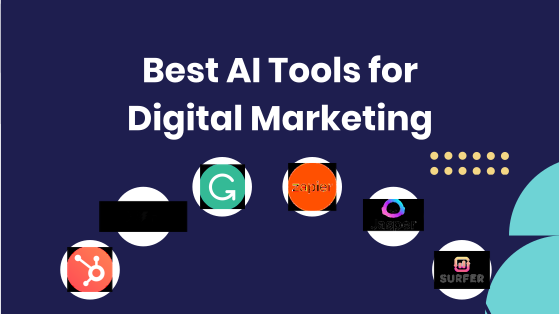
There are hundreds of AI tools out there. Below are some of the most popular and useful ones for digital marketers today. We’ve grouped them by task, so you can pick what fits your needs.
Jasper is an AI writing assistant. It helps marketers write blog posts, ads, emails, and product descriptions.
Pros:
Cons:
Pricing: Starts at $49/month
Use Case: A small business uses Jasper to write weekly blog posts. They save 8 hours per week and focus more on strategy.
Copy. ai is known for quick, creative copywriting—great for social media, emails, or ads.
Pros:
Cons:
Pricing: Free plan available; paid from $36/month
Use Case: A social media manager uses Copy.ai to brainstorm 20 captions in minutes.
Canva’s AI features help marketers create visuals fast. Magic Write suggests text, while Magic Design builds layouts.
Pros:
Cons:
Pricing: Free basic plan; Pro starts at $12.99/month
Use Case: A marketer creates Instagram posts and infographics without hiring a designer.
DALL-E (by OpenAI) generates unique images from your text prompts.
Pros:
Cons:
Pricing: Pay-per-image (about $0.13 per image)
Use Case: A brand creates custom images for product launches and stands out from competitors.
LatelyAI uses AI to repurpose content into dozens of social media posts.
Pros:
Cons:
Pricing: Starts at $49/month
Use Case: An agency turns long blog posts into bite-sized LinkedIn updates.
Buffer now includes AI to suggest captions and best posting times.
Pros:
Cons:
Pricing: Free plan; paid plans from $6/month
Use Case: A small business schedules a week of posts in 10 minutes.
Mailchimp’s AI suggests subject lines and content tweaks to boost open rates.
Pros:
Cons:
Pricing: Free for basic; paid from $13/month
Use Case: An e-commerce store increases email open rates by 20% using Mailchimp’s AI.
Seventh Sense uses AI to find the best send times for each contact.
Pros:
Cons:
Pricing: From $64/month
Use Case: A B2B company gets more leads by sending emails when each contact is most active.
Surfer SEO analyzes top-ranking pages and gives AI-driven content suggestions.
Pros:
Cons:
Pricing: From $69/month
Use Case: A blog writer improves their ranking by following Surfer’s keyword and structure tips.
Clearscope’s AI helps you pick the right keywords and topics for your articles.
Pros:
Cons:
Pricing: From $170/month
Use Case: An agency uses Clearscope to increase client traffic by 30% in 6 months.
GA4 uses AI to predict user behavior and spot trends.
Pros:
Cons:
Pricing: Free
Use Case: A brand spots a drop in traffic and uses AI insights to fix their landing page.
PaveAI turns Google Analytics data into easy-to-read reports and suggestions.
Pros:
Cons:
Pricing: From $39/month
Use Case: A marketer quickly finds which campaigns drive sales.
Drift’s AI chatbot answers website questions, books meetings, and captures leads.
Pros:
Cons:
Pricing: Custom, usually $2,500/year+
Use Case: A SaaS company gets 40% more leads by using Drift on their homepage.
Intercom’s AI bots handle common questions and route users to the right human agent.
Pros:
Cons:
Pricing: From $74/month
Use Case: An e-commerce store cuts response time from hours to minutes.
—
Here’s a side-by-side look at three of the most popular AI tools for digital marketers:
| Tool | Main Feature | Best For | Pricing | Pros | Cons |
|---|---|---|---|---|---|
| Jasper | AI content writing | Bloggers, agencies | From $49/month | Fast, many templates | Needs editing |
| Canva | AI image/design | Social media, ads | Free, Pro $12.99/month | Easy, creative | Limited advanced options |
| Mailchimp | AI email optimization | Email marketers | Free, paid from $13/month | Boosts open rates | Some features paid only |
Let’s see how these AI tools help in the real world:
Here is another comparison of how three different tools help with social media:
| Tool | Function | Key Benefit | Example Use |
|---|---|---|---|
| LatelyAI | Content repurposing | Save time on post creation | Turn blogs into LinkedIn posts |
| Buffer | Scheduling & AI captions | Post at best times | Plan week of posts in minutes |
| Canva | AI image design | Eye-catching visuals | Create branded Instagram graphics |
Selecting an AI tool is not just about features. You need to think about your goals, team size, and budget. Here are key things to consider:
Expert tip: Always test a tool with a free trial before paying. Many users make the mistake of buying full plans and later finding they don’t fit their workflow.
AI tools offer more than just speed or automation. Here’s what you gain:
One non-obvious insight: AI can uncover new audiences or trends before your competitors notice them. For example, an AI tool might spot that a new product is trending in a certain region, letting you launch ads early.
Another insight: AI reduces human bias. Sometimes marketers trust their gut, but AI relies on data—leading to more accurate decisions.
Even the best tools won’t help if you make these mistakes:
A practical example: If you use Jasper to write blogs and never edit or give feedback, the content may stay generic. But if you tweak and guide the AI, it gets better with each use.
Credit: www.sixandflow.com
A medium-sized online store used Mailchimp’s AI to personalize email content and timing. By sending emails when each customer was most likely to open, open rates jumped by 22%. Sales from email increased by 18% over three months.
A marketing agency used LatelyAI to turn blog posts into dozens of social media snippets. This saved 10 hours per week per client. Engagement rates also rose, as posts were better targeted and more frequent.
A small travel site used Surfer SEO and Clearscope to optimize their content. Within four months, five keywords moved from page 2 to the top 5 positions on Google, driving 40% more traffic.
AI tools vary widely in cost. Here’s a quick look at typical pricing:
| Tool Category | Entry Price | Premium Price | Free Plan? |
|---|---|---|---|
| Content Writing | $36/month | $99+/month | Yes (Copy.ai, Jasper) |
| Design/Images | $0/month | $30+/month (Canva Pro, DALL-E) | Yes (Canva) |
| Email Marketing | $13/month | $299+/month | Yes (Mailchimp) |
| SEO Optimization | $69/month | $170+/month | No |
| Social Media | $6/month | $99+/month | Yes (Buffer) |
| Analytics | $0 (GA4) | $39+/month (PaveAI) | Yes (GA4) |
Insight: Some of the best AI features are in paid plans, but many tools offer free trials or starter tiers. Always compare what’s included before committing.

Credit: www.techfinitive.com
It’s important to know both the upsides and downsides before diving in.
Tip: Always balance automation with human review—this gives you the best of both worlds.
After working with many brands and businesses, here’s what experts suggest:
Advanced insight: Some AI tools let you fine-tune or “train” them to better match your brand’s voice. If you publish a lot of content, this can be a game changer.
For more on AI in marketing, the McKinsey & Company report covers deeper industry trends.
AI isn’t slowing down. Here’s what to watch in the next few years:
Expert tip: Early adopters of new AI features often gain an edge. Keep an eye on new launches, but don’t jump in until you see real value.
AI tools are software that use artificial intelligence to help with marketing tasks. They can write content, design images, analyze data, send emails, and more. The goal is to save time and improve results.
First, define your main goal (e. g. , more website traffic, better emails, faster design). Then, look for AI tools that focus on that area. Test with a free trial and see if it fits your workflow and budget.
Prices range from free to hundreds of dollars per month. Many top tools offer free plans or trials. Paid features usually save time or improve results, so they may pay for themselves.
AI can automate tasks, but humans are still needed for strategy, creativity, and relationship-building. The best results come from combining AI with human skills.
Don’t expect AI to be perfect out of the box. Always review and edit AI-generated content. Train the tool by giving feedback so it improves over time.
Digital marketing is moving fast, and AI tools are at the center of this change. By picking the right tools, learning how they work, and balancing automation with a personal touch, you can grow your brand faster and smarter. Start exploring AI tools today and give your marketing strategy a serious upgrade.

Credit: kurieta.com
