Digital marketing is changing fast. The rise of artificial intelligence (AI) is making many marketing tasks easier, faster, and smarter. From creating social media posts to running ad campaigns, AI tools are now at the heart of modern marketing strategies. But with so many choices, it can be hard to know which tools actually help, which are just hype, and how to use them for real results.
This article will guide you through the world of AI tools for digital marketing. You’ll learn how these tools work, what makes each one special, and how to pick the right ones for your needs. We’ll cover popular options, compare features, and show real examples of how marketers use AI every day. Whether you’re a beginner or a seasoned marketer, this guide will help you get ahead with AI.
AI is not just a buzzword. It’s a group of technologies that can analyze data, recognize patterns, and make decisions—often faster and better than humans. In digital marketing, this means you can automate routine tasks, personalize content for each user, and understand what your customers want.
Some marketers worry that AI will replace human jobs. But the reality is that AI works best when it helps humans do their jobs faster and smarter. For example, AI can sort through thousands of customer emails in minutes, but it still needs a human touch to create the right message.
Key benefits of AI in digital marketing:
Let’s look at the most popular and effective AI tools used by marketers today. Each tool has its own strengths, pricing, and best use cases. We’ll also cover pros, cons, and examples for each.
Jasper is an AI writing tool that helps marketers create blog posts, ads, emails, and more. It’s known for its easy-to-use interface and high-quality results.
Pros:
Cons:
Pricing: Starts at $49/month for basic plans.
Use Cases: Writing blog posts, product descriptions, and ad copy.
ChatGPT is a powerful AI chatbot. Marketers use it for customer support, idea generation, and even writing content.
Pros:
Cons:
Pricing: Free basic version; Pro plan at $20/month.
Use Cases: Website chatbots, writing help, customer engagement.
Canva’s AI features bring fast design to non-designers. The Magic Write tool creates text, while Magic Design suggests layouts.
Pros:
Cons:
Pricing: Free basic plan; Pro at $12.99/month.
Use Cases: Social media posts, presentations, ads.
Surfer SEO is an AI-powered SEO tool. It helps optimize content to rank higher on Google by analyzing top-ranking pages.
Pros:
Cons:
Pricing: Starts at $89/month.
Use Cases: Blog optimization, keyword research, content audits.
HubSpot’s AI features boost its well-known marketing platform. It automates tasks like email personalization and lead scoring.
Pros:
Cons:
Pricing: Free basic tools; paid plans from $50/month.
Use Cases: Email campaigns, lead management, customer journeys.
SEMrush uses AI for keyword research, competitor analysis, and content recommendations.
Pros:
Cons:
Pricing: Starts at $129.95/month.
Use Cases: SEO audits, PPC management, content strategy.
Lately AI turns long-form content (like blogs or podcasts) into many short social posts, using AI to find the best parts.
Pros:
Cons:
Pricing: Custom pricing, usually starts around $179/month.
Use Cases: Social media content, repurposing webinars, video clips.
AdCreative. ai creates ad images and text for Facebook, Google, and other platforms.
Pros:
Cons:
Pricing: Starts at $29/month.
Use Cases: Ad campaigns, creative testing, quick visuals.
MarketMuse uses AI to plan, research, and optimize web content.
Pros:
Cons:
Pricing: Free plan available; paid from $149/month.
Use Cases: Content planning, website audits, topic research.
Grammarly uses AI for grammar, style, and clarity checks in writing.
Pros:
Cons:
Pricing: Free plan; Premium from $12/month.
Use Cases: Emails, social media posts, blog editing.
Choosing the right tool means looking at price, features, and best uses. Here’s a side-by-side look at some of the top options:
| Tool | Main Use | Price (Starting) | Best For | Unique Feature |
|---|---|---|---|---|
| Jasper | AI Writing | $49/month | Content teams, bloggers | SEO-friendly templates |
| ChatGPT | Chatbot, writing help | Free / $20 Pro | Support, idea generation | Flexible conversations |
| Canva AI | Design & copy | Free / $12.99 Pro | Social media, ads | Magic Write, Magic Design |
| Surfer SEO | SEO optimization | $89/month | Content SEO | Real-time analysis |
| HubSpot AI | Automation | Free / $50+ | Email, lead nurturing | Workflows, lead scoring |
| SEMrush | SEO & PPC research | $129.95/month | Agencies, large teams | Competitor insights |
| Lately AI | Content repurposing | $179/month | Social media managers | AI-driven snippets |
AI tools can be used in almost every part of digital marketing. Here’s how they’re making a difference:
AI writing tools like Jasper and ChatGPT help marketers produce more content in less time. They can generate blog ideas, write drafts, and even suggest headlines. But human editing is still needed to keep the content unique and on-brand.
Non-obvious insight: AI can analyze top-performing competitors and suggest content gaps you haven’t covered yet, not just help write more.
Tools like Surfer SEO and SEMrush use AI to study Google’s search results and recommend changes to your web pages. They highlight keywords, suggest improvements, and even score your content.
Common mistake: Relying only on AI suggestions without checking if they fit your audience’s real interests can lead to robotic content.
AI-powered platforms like Lately AI and Canva help marketers keep social feeds fresh. They can turn one blog post into dozens of social snippets, or create visuals in minutes.
Practical tip: Use AI to test many post variations quickly—sometimes a small change in wording can double engagement.
Platforms like HubSpot use AI to personalize emails for each subscriber. AI can predict the best send times, suggest subject lines, and even score which leads are most likely to buy.
Non-obvious insight: AI can help recover “cold” leads by sending targeted follow-up messages based on user behavior.
AdCreative.ai and SEMrush use AI to design ads, pick keywords, and run A/B tests. AI finds which ad combinations work best, saving money and time.
Expert tip: Let AI handle the initial tests, but always review winning ads to make sure they match your brand’s message.
Here’s another look at how the most-used AI marketing tools stack up on features:
| Tool | Content Creation | SEO | Design | Automation | Analytics |
|---|---|---|---|---|---|
| Jasper | ✔️ | ✔️ | ✔️ | ||
| ChatGPT | ✔️ | ✔️ | |||
| Canva AI | ✔️ | ✔️ | |||
| Surfer SEO | ✔️ | ✔️ | |||
| HubSpot AI | ✔️ | ✔️ | |||
| Lately AI | ✔️ | ✔️ | ✔️ |
AI is already changing how companies market online. Here are a few examples from different industries:
A small fashion store used AdCreative.ai to quickly make hundreds of ad variations. The AI found the top-performing ads, which led to a 35% increase in sales in one month.
A SaaS startup used Jasper and Surfer SEO together to write and optimize blog content. Website traffic grew by 60% in six months, thanks to better SEO and faster content production.
A marketing agency used Lately AI to repurpose their client’s webinars into dozens of social posts. This saved 20+ hours per month and helped clients stay active on social media without new video shoots.
A dentist’s office used ChatGPT to answer common patient questions on their website. This reduced support emails by 40% and improved patient satisfaction.
Insight: Even small teams can get big results from AI—no need for large budgets or in-house developers.
Pros:
Cons:
Knowing what you’ll pay helps you plan your budget. Here’s a quick look:
| Tool | Free Plan | Starting Price (Monthly) | Notes |
|---|---|---|---|
| Jasper | No | $49 | Includes templates and workflows |
| ChatGPT | Yes | $20 | Free version limited |
| Canva AI | Yes | $12.99 | AI features in Pro plan |
| Surfer SEO | No | $89 | Best for content teams |
| HubSpot AI | Yes | $50 | Grows with business |
| SEMrush | No | $129.95 | Agencies, advanced users |
| Lately AI | No | $179 | Custom pricing for big teams |
| AdCreative.ai | No | $29 | Best for ad creatives |
| MarketMuse | Yes | $149 | Free plan limited |
| Grammarly | Yes | $12 | Premium for advanced checks |
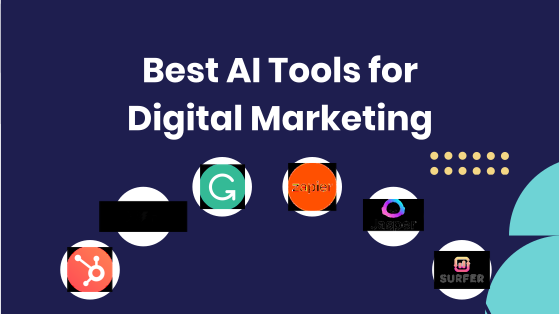
Credit: www.sixandflow.com
Not every AI tool is right for every business. Here’s how to pick the best ones:
Common mistake: Buying too many tools without a clear plan often leads to wasted money and confusion.
Based on current trends and expert opinions, here’s what leading marketers suggest for the coming year:

Credit: www.techfinitive.com
AI will only get smarter. Expect to see more tools that can create video content, predict trends, and understand customer emotions. But remember, the best results come from mixing AI’s speed with your brand’s unique voice.
Non-obvious insight: As AI gets better, “average” content will flood the internet. What stands out will be creative ideas and human storytelling—supported by AI, not replaced by it.
If you want to stay ahead, start learning how to use AI tools now. The earlier you start, the bigger your advantage will be.
AI tools for digital marketing are software solutions that use artificial intelligence to help marketers automate tasks, analyze data, and improve their campaigns. Examples include AI writing assistants, chatbots, SEO analyzers, and ad generators.
AI improves results by:
It helps you do more with less time and often with better accuracy.
AI tool prices vary. Some, like ChatGPT or Grammarly, offer free versions. More advanced tools like Surfer SEO or Jasper can cost $49–$150+ per month. Always check if a free trial or plan is available before buying.
No. AI is best as a helper, not a replacement. It can automate and analyze, but human creativity, strategy, and empathy are still key. The best results come from combining AI with your own skills.
You can find good overviews and updates on trusted sites like Wikipedia. Many tool providers also offer tutorials and blogs to help you get started.
Digital marketing will always change, but those who learn to use AI will have a big edge. Start with one or two tools, test their impact, and keep learning. Your future marketing success will thank you.

Credit: kurieta.com
