Imagine running your small business with more time, less stress, and smarter decisions. Today, AI tools are changing how small businesses work. These tools help owners save money, boost sales, and improve customer service, even if their team is small or budgets are tight.
For years, AI (Artificial Intelligence) seemed like a thing only big companies could use. Now, thanks to easy-to-use apps, affordable subscriptions, and simple integrations, AI is accessible for everyone. Small businesses—from retail shops to consulting firms—are using AI to handle tasks like managing inventory, responding to customers, and creating marketing content.
This article shows how AI tools can help your business, which tools are best, what they cost, and how to use them wisely.
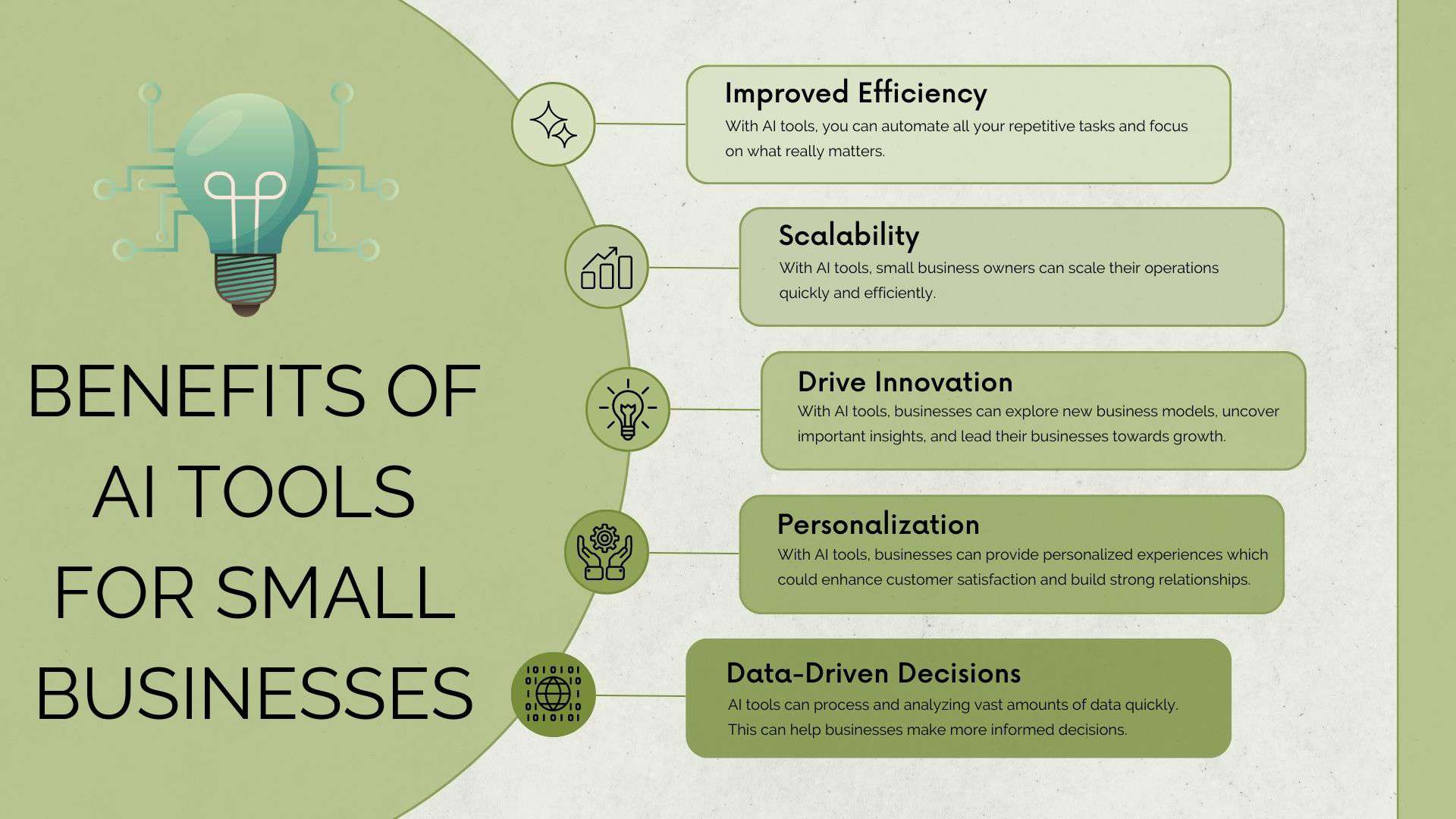
Small business owners often wear many hats. You may be the manager, the marketer, the accountant, and the salesperson. AI tools can help you work smarter by automating tasks, finding patterns in data, and supporting decision-making. Here are some clear reasons why AI matters:
Many owners worry AI is too complex. But today’s tools are made for non-experts. Most require no coding, offer simple dashboards, and work with popular apps like Shopify, QuickBooks, and Gmail.
There are many kinds of AI tools. Each helps with a different area of business. Here are the main types you should know:
These tools use natural language processing to talk with customers, answer questions, and handle tasks. Chatbots can be added to websites, Facebook pages, or messaging apps. Examples include ChatGPT, Zendesk AI, and Drift.
AI can help create content, schedule posts, and analyze marketing performance. Tools like Jasper and HubSpot AI generate blog posts, emails, and ads. Others, like Mailchimp AI, optimize email campaigns and segment contacts.
AI sales tools track leads, score prospects, and automate follow-ups. Salesforce Einstein and Zoho CRM AI are popular. These tools help sales teams close deals faster and manage pipelines better.
AI can manage invoices, expenses, and financial forecasts. QuickBooks AI and Xero AI automate bookkeeping and detect fraud. These tools save hours and reduce costly mistakes.
Inventory tools like Shopify AI and NetSuite AI monitor stock levels, predict demand, and optimize orders. They help avoid overstocking or running out of products.
AI tools screen resumes, schedule interviews, and track applicants. Breezy HR AI and Workable AI speed up hiring and reduce bias.
Analytics tools like Google Analytics AI and Tableau AI find patterns in your business data. They help spot trends, risks, and growth opportunities.
Choosing the right AI tool can feel overwhelming. To make it easier, here’s a comparison of popular AI tools for small businesses. This covers their features, pricing, pros, and cons.
| Tool | Main Use | Starting Price | Key Features | Pros | Cons |
|---|---|---|---|---|---|
| ChatGPT | Customer Service, Content | $20/month | Chatbot, content generation, language translation | Easy to use, versatile, improves productivity | Limited customization, may give generic answers |
| HubSpot AI | Marketing Automation | $50/month | Email automation, blog generator, lead scoring | Integrates with CRM, boosts marketing | Some features require higher plans |
| QuickBooks AI | Accounting | $30/month | Invoice automation, expense tracking, fraud detection | Saves time, reduces errors | Limited support for some banks |
| Mailchimp AI | Email Marketing | $13/month | Campaign optimization, segmentation, analytics | Good for beginners, helpful analytics | Can get expensive with large lists |
| Shopify AI | E-commerce, Inventory | $39/month | Stock tracking, demand prediction, chatbot | Easy setup, strong integrations | Advanced AI features need add-ons |
| Zoho CRM AI | Sales Management | $14/month | Lead scoring, sales automation, analytics | Affordable, rich features | Learning curve for setup |
ChatGPT is a popular AI tool for small businesses. You can use it as a chatbot, virtual assistant, or content generator. It helps with customer questions, writing emails, and even translating languages.
HubSpot AI makes marketing easier. It creates content, automates emails, and scores leads. The tool connects with HubSpot’s CRM, so you can manage contacts and sales in one place.
QuickBooks AI helps with accounting. It automates invoices, tracks expenses, and warns about possible fraud. The software fits small businesses and freelancers.
Mailchimp AI is great for email marketing. It suggests best times to send emails, segments your audience, and reports campaign results.
Shopify AI supports online stores with inventory tracking and demand prediction. It also offers basic chatbots for customer support.
Zoho CRM AI is for managing sales. It scores leads, automates follow-ups, and tracks sales performance.
AI tools now fit almost any budget. Most offer monthly subscriptions and free trials. Here’s a quick price comparison to help you plan:
| Tool | Free Version | Lowest Paid Plan | Best For |
|---|---|---|---|
| ChatGPT | Yes (limited) | $20/month | General tasks, chatbots |
| HubSpot AI | Yes (basic) | $50/month | Marketing automation |
| QuickBooks AI | No | $30/month | Accounting, bookkeeping |
| Mailchimp AI | Yes (basic) | $13/month | Email marketing |
| Shopify AI | No | $39/month | E-commerce inventory |
| Zoho CRM AI | Yes (trial) | $14/month | Sales management |
Tip: Many tools offer free trials. Try before buying to see if the features fit your business needs.
AI tools are not just theory—they deliver results in the real world. Here are practical examples:
A clothing shop uses Shopify AI to track what sells best. The AI predicts which products will be popular next month, so the owner orders only what’s needed. The store also has a chatbot powered by ChatGPT to answer customer questions online, even after hours.
A small marketing agency uses HubSpot AI and Mailchimp AI. HubSpot generates blog ideas and scores leads, so the team targets the right clients. Mailchimp’s AI finds the best time to send emails and segments the audience to improve results.
A local restaurant uses QuickBooks AI to automate invoices and track expenses. The staff saves hours each week. They also use an AI chatbot to manage online reservations and answer menu questions.
A consulting firm uses Zoho CRM AI to track leads and automate follow-ups. The tool scores prospects so the team focuses on the most promising clients. This increases sales and reduces lost opportunities.
An online shop owner uses Shopify AI for inventory and Mailchimp AI for marketing. The AI helps keep products in stock, predicts trends, and sends personalized emails to customers.
Picking the right AI tool depends on your needs, budget, and tech skills. Here’s what to consider:
Credit: kripeshadwani.com
While AI brings many benefits, there are risks and challenges to consider. Here’s a balanced view:
Non-obvious insight: It’s smart to start with one simple AI tool, then expand. Many businesses fail by trying too many tools at once.
AI can help, but only if used wisely. Here are mistakes to avoid:
Non-obvious insight: Assign one team member as your “AI champion”—someone who learns the tool deeply and helps others.
AI is not magic. You need a plan. Here are tips from business experts:
For more expert advice, visit SBA.gov.
AI adoption among small businesses is growing quickly. According to a 2023 survey by Salesforce:
Another study shows that businesses using AI for customer support see a 30% reduction in response time and 20% higher customer satisfaction.
| Business Size | % Using AI Tools | Main Benefits Reported |
|---|---|---|
| Solo Entrepreneurs | 52% | Time savings, content creation |
| 2-10 Employees | 64% | Customer service, sales automation |
| 11-50 Employees | 71% | Inventory, marketing analytics |
| 51-100 Employees | 78% | Advanced analytics, HR automation |
Credit: upmetrics.co
If you’re ready to try AI, here’s a simple process:
There is no single “best” tool. It depends on your needs. For customer support, ChatGPT is popular. For marketing, HubSpot AI and Mailchimp AI work well. For accounting, QuickBooks AI is reliable. Choose based on your main challenge.
Most AI tools are affordable. Many offer free versions or trials. Paid plans range from $13 to $50 per month. The real value comes from time saved and improved accuracy.
Most modern AI tools are made for non-technical users. They have simple dashboards and step-by-step guides. Some tools offer training videos and customer support.
AI chatbots can answer common questions, handle bookings, and solve problems 24/7. This reduces wait times and improves customer satisfaction.
Risks include data privacy, over-reliance on automation, and extra costs for advanced features. Always review privacy policies, start small, and monitor results.

Credit: biztechmagazine.com
AI tools are helping small businesses compete, grow, and save time. They are not just for tech experts or big companies anymore. With the right tool, you can automate tasks, make smarter decisions, and focus on what matters most. Start with your biggest pain point, try a free trial, and measure your results. The future belongs to businesses that embrace smart technology, and AI tools are now within everyone’s reach.
Ready to transform your business? Explore your options, take small steps, and let AI help you work smarter—not harder.
