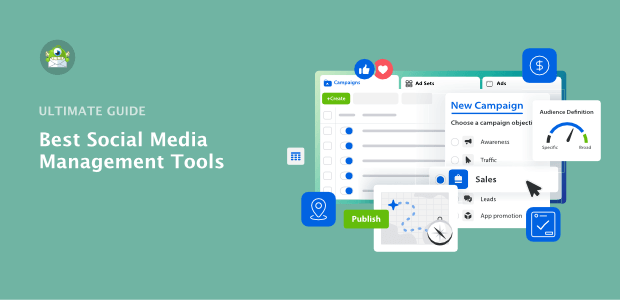
Social media is now a key part of every business and brand. But managing many accounts, posts, and messages is not easy. It can feel overwhelming, especially for teams or busy entrepreneurs. This is where social media management tools come in. These tools help you save time, stay organized, and grow your online presence. They let you schedule posts, track analytics, respond to followers, and much more—all from one place.
You might be wondering, “Which tool is right for me? ” The answer depends on your needs, budget, and platforms. This guide will help you understand the best options available today. You will learn about their features, pricing, pros and cons, and real-world examples.
Whether you are new to social media or have years of experience, you will find practical advice here. Let’s explore the world of social media management and discover which tool will help you reach your goals.
Handling social media without a tool is like juggling too many balls. You might miss important messages, post at the wrong time, or forget to track your results. With a management tool, you can:
Studies show that businesses using management tools are 30% more efficient in their social media tasks. They also have higher engagement rates because they post at the best times and respond faster.
Choosing a tool can be confusing. Here are the most important features to consider:
A common mistake is picking a tool that only fits one platform. Make sure your choice supports all the networks you use.
Credit: optinmonster.com
Below are the best tools available in 2024. Each has its own strengths and weaknesses. Read carefully to find the one that fits your needs.
Hootsuite is one of the oldest and most popular tools. It supports all major platforms and has powerful features.
Pros:
Cons:
Pricing: Starts at $99/month for professionals. Teams and enterprise plans cost more.
Use Case: A marketing team at a large company uses Hootsuite to manage Facebook, Twitter, and LinkedIn accounts, schedule campaigns, and analyze results.
Buffer is known for its clean, simple interface. It is easy to use and great for small businesses.
Pros:
Cons:
Pricing: Free plan for 3 accounts. Paid plans start at $6/month per channel.
Use Case: A solo entrepreneur manages Instagram and Twitter, schedules posts ahead, and checks analytics using Buffer.
Sprout Social offers strong analytics and team collaboration. It is popular with agencies and big brands.
Pros:
Cons:
Pricing: Starts at $249/month per user.
Use Case: An agency uses Sprout Social for multiple clients, tracks engagement, and creates branded reports.
Later focuses on visual content, especially for Instagram. It helps plan and preview posts with a drag-and-drop calendar.
Pros:
Cons:
Pricing: Free plan for basic use. Paid plans start at $18/month.
Use Case: A fashion brand schedules Instagram stories and posts, plans their feed, and finds trending hashtags with Later.
SocialBee is a flexible tool for scheduling and content recycling. It works with all major networks and has many automation features.
Pros:
Cons:
Pricing: Plans start at $29/month.
Use Case: A blogger uses SocialBee to post evergreen content to Facebook and Twitter, saving time with content recycling.
Agorapulse is a popular choice for managing messages and building reports. It’s good for teams and agencies.
Pros:
Cons:
Pricing: Starts at $69/month per user.
Use Case: An agency uses Agorapulse to answer customer questions from Facebook and Twitter, and sends weekly reports to clients.
Zoho Social is affordable and integrates well with Zoho CRM. It’s great for small businesses and startups.
Pros:
Cons:
Pricing: Starts at $15/month per brand.
Use Case: A startup connects Zoho Social to Zoho CRM, schedules posts, and tracks leads from social platforms.
Sendible is designed for agencies managing many clients. It offers white-label branding and strong scheduling features.
Pros:
Cons:
Pricing: Starts at $29/month for individuals, $89/month for agencies.
Use Case: An agency manages 10 clients, customizes dashboards, and schedules posts in bulk with Sendible.
MeetEdgar is famous for its content recycling. It helps keep your social feeds active without extra effort.
Pros:
Cons:
Pricing: Starts at $29.99/month.
Use Case: A consultant schedules evergreen tips for Twitter and Facebook, letting MeetEdgar repeat them automatically.
Loomly offers easy collaboration and post-approval workflows. It is good for teams creating content together.
Pros:
Cons:
Pricing: Starts at $26/month for 2 users.
Use Case: A small team creates Facebook ads, collaborates on drafts, and schedules content in Loomly.
Choosing the right tool can be easier with a side-by-side comparison. Here’s a helpful table:
| Tool | Platforms Supported | Best For | Starting Price (USD) | Scheduling | Analytics | Team Features | Mobile App |
|---|---|---|---|---|---|---|---|
| Hootsuite | All major | Large teams | $99/mo | Yes | Advanced | Yes | Yes |
| Buffer | All major | Small business | $6/mo | Yes | Basic | Limited | Yes |
| Sprout Social | All major | Agencies | $249/mo | Yes | Advanced | Yes | Yes |
| Later | Instagram, TikTok | Visual brands | $18/mo | Yes | Basic | Limited | Yes |
| SocialBee | All major | Content recycling | $29/mo | Yes | Limited | Yes | Yes |
| Agorapulse | Facebook, Twitter, Instagram, LinkedIn | Teams | $69/mo | Yes | Advanced | Yes | Yes |
| Zoho Social | All major | Small business | $15/mo | Yes | Basic | Yes | Yes |
| Sendible | All major | Agencies | $29/mo | Yes | Advanced | Yes | Yes |
| MeetEdgar | Facebook, Twitter, LinkedIn | Content recycling | $29.99/mo | Yes | Limited | No | Yes |
| Loomly | All major | Collaboration | $26/mo | Yes | Basic | Yes | Yes |

Credit: thepower.education
Seeing how tools work in real life helps you decide. Here are practical examples:
A non-obvious insight: Many tools let you set up “approval workflows.” This means every post must be approved by a manager before it goes live. This feature helps prevent mistakes and keeps your brand safe.
There is no “one-size-fits-all” answer. Here’s how to make a smart choice:
A common mistake is paying for features you never use. Start with basic plans and upgrade only when you need more.

Credit: sproutsocial.com
To help you decide, here’s another table showing user satisfaction based on recent surveys (2024).
| Tool | Ease of Use (1-5) | Customer Support (1-5) | User Rating (1-5) | Recommended for Beginners |
|---|---|---|---|---|
| Hootsuite | 3.8 | 4.0 | 4.2 | No |
| Buffer | 4.6 | 4.2 | 4.5 | Yes |
| Sprout Social | 4.0 | 4.5 | 4.4 | No |
| Later | 4.7 | 4.1 | 4.6 | Yes |
| SocialBee | 4.2 | 4.0 | 4.3 | Yes |
| Agorapulse | 4.1 | 4.4 | 4.2 | No |
| Zoho Social | 4.5 | 4.3 | 4.5 | Yes |
| Sendible | 4.0 | 4.2 | 4.3 | No |
| MeetEdgar | 4.2 | 4.0 | 4.2 | Yes |
| Loomly | 4.3 | 4.1 | 4.4 | Yes |
Experts often suggest starting with a tool that matches your current needs and budget. Here are some practical tips:
A second insight: Look for tools that offer social listening. This feature lets you track brand mentions, trends, and competitors in real time. It’s valuable for growing your reputation and spotting issues early.
Many people make avoidable errors:
Always check reviews, ask for demos, and start with a trial if possible.
The world of social media is changing fast. Here are some trends to watch:
According to Statista, social media ad spending reached $173 billion in 2023 and is expected to keep growing. This makes smart management even more important.
A social media management tool is software that helps you schedule posts, track analytics, reply to messages, and manage many accounts from one dashboard. It saves time and improves organization.
Most tools offer a free plan or trial. These usually have limits on accounts, posts, or analytics. Paid plans unlock more features and support.
Later is a top choice for Instagram because it has a visual planner, hashtag tools, and supports stories and reels. Buffer also works well for basic scheduling.
Use the analytics feature in your tool to track likes, shares, comments, follower growth, and clicks. Set clear goals and check your results every month.
Yes, reputable tools use secure connections and follow privacy standards. Always use official tools and avoid sharing passwords with unknown services.
Choosing the right social media management tool can transform your workflow and improve your results. Start by listing your goals, platforms, and budget. Test a few tools and pick the one that feels comfortable and meets your needs. Remember, your time is valuable. The right tool will help you focus on creative content and real engagement, not just scheduling posts.
If you want to grow your brand online, don’t wait. Explore the tools above, try their free plans, and invest in the one that fits your business. Managing social media is easier—and more effective—with the right solution.
Ready to take your social strategy to the next level? Start with a trial and see the difference for yourself. The best tool is the one you will actually use every day.
